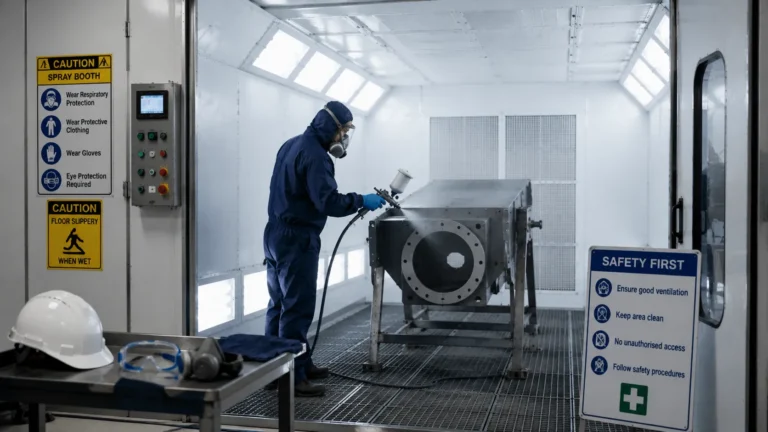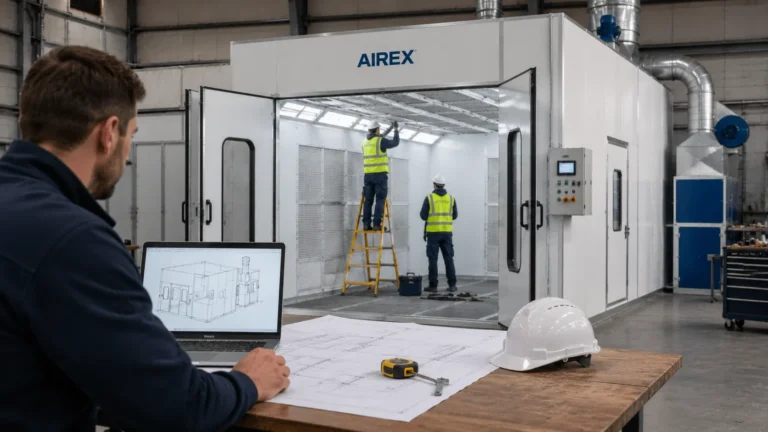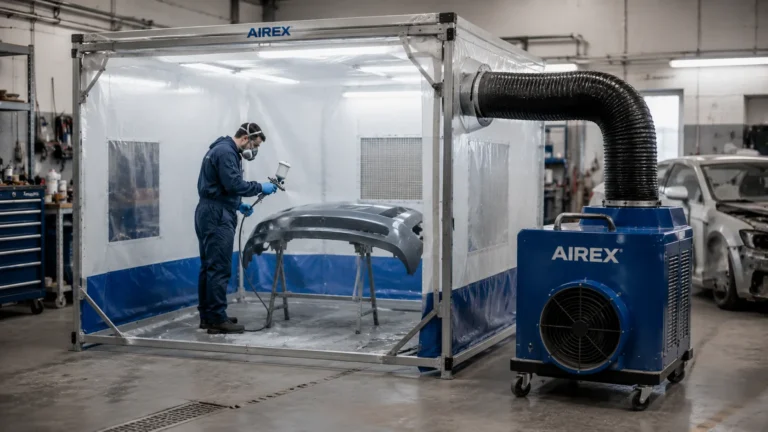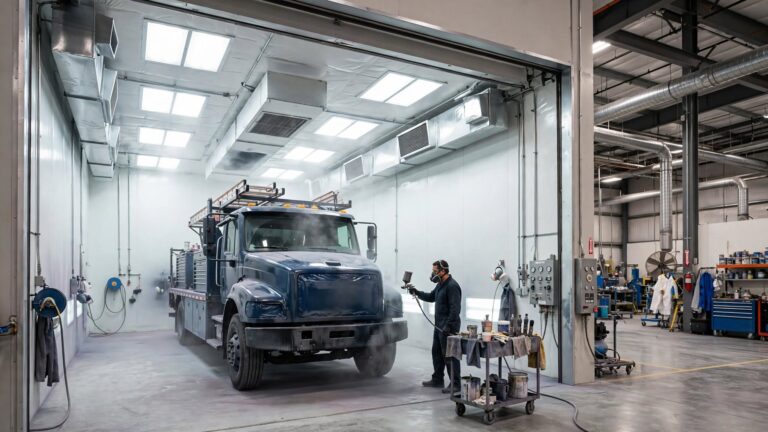

Mobile Spray Booth Extractor Fans play a vital role in modern finishing environments. They remove airborne paint particles, fumes, and overspray from confined workspaces. This process improves air quality and supports safer spraying conditions. Many workshops now prefer portable extraction systems because they offer flexibility without permanent installation costs.
Small automotive garages, woodworking shops, and industrial coating facilities all rely on efficient airflow control. Poor ventilation increases fire risks and exposes workers to harmful volatile organic compounds. According to the UK Health and Safety Executive, inadequate extraction can quickly raise airborne contaminant levels during spraying operations. Proper extraction reduces these hazards and keeps work areas compliant.
Mobile Spray Booth Extractor Fans also help maintain finish quality. Dust and overspray can settle on wet coatings within minutes. Effective airflow prevents contamination and supports smoother paint results. Portable systems offer another advantage because they can move between workstations with minimal disruption. This flexibility makes them suitable for growing businesses and temporary spraying zones.
Choosing the correct extraction setup requires careful planning. Airflow rates, filter systems, and fan positioning all influence performance. Understanding these factors helps workshops improve efficiency while reducing operational risks. Start with our comprehensive guide on the homepage.
Mobile Spray Booth Extractor Fans are portable ventilation units designed for spray painting environments. Their main purpose is to extract contaminated air and replace it with cleaner airflow. Most systems include a powerful fan, filtration stages, ducting, and movable housing.
Portable extractors differ from fixed spray booth systems because they can move easily. Many units use heavy-duty castors and compact frames for quick relocation. This design allows operators to position the extraction close to active spraying areas. Shorter extraction distances improve overspray capture efficiency and reduce airborne contamination.
These systems commonly support:
Automotive refinishing.
Industrial metal coating.
Wood finishing operations.
Plastic component spraying.
Temporary spray applications.
Every extractor system relies on balanced airflow and effective filtration. The fan motor generates suction pressure that pulls contaminated air through filters. Multi-stage filtration traps larger paint particles before finer filters capture smaller contaminants.
The table below outlines common system components and their functions.
| Component | Function |
|---|---|
| Extraction Fan | Removes contaminated air. |
| Pre-Filters | Capture larger paint particles. |
| Fine Filters | Trap smaller airborne contaminants. |
| Flexible Ducting | Directs airflow safely outside. |
| Control Panel | Manages airflow and fan speed. |
| Portable Housing | Allows easy movement between areas. |
Correct component selection directly affects extraction performance and workplace safety.
Mobile Spray Booth Extractor Fans significantly improve operator safety. Spray coatings release fumes that may contain solvents and hazardous chemicals. Continuous exposure can cause respiratory irritation and long-term health concerns.
Portable extraction removes these contaminants before they accumulate. Many systems achieve high airflow rates exceeding 5,000 cubic metres per hour. Strong airflow reduces vapour concentration and keeps visibility clear during spraying tasks.
Fire prevention is another major benefit. Solvent vapours become dangerous in poorly ventilated spaces. Proper extraction reduces flammable vapour build-up and supports safer working conditions. This protection is essential for workshops handling solvent-based paints regularly.
Dust contamination remains one of the biggest causes of poor paint finishes. Overspray particles often settle back onto freshly coated surfaces. Extraction fans reduce airborne particles and maintain cleaner spraying conditions.
Improved airflow also supports even drying conditions. Stable ventilation prevents excessive moisture build-up inside the workspace. Consistent air movement helps coatings cure evenly and reduces surface defects.
Workshops using effective extraction systems often report:
Fewer rework jobs.
Reduced paint waste.
Faster project completion.
Lower cleaning requirements.
Improved customer satisfaction.
These advantages help businesses maintain productivity while protecting coating quality standards.
Correct positioning determines how effectively Mobile Spray Booth Extractor Fans remove overspray. The extractor should sit opposite the fresh air intake area. This arrangement creates directional airflow across the spraying zone.
Operators should avoid placing extractors directly beside the spraying gun. Poor positioning can disturb spray patterns and affect coating consistency. Balanced airflow delivers better contaminant capture without disrupting application quality.
Flexible ducting also requires careful routing. Sharp bends reduce airflow efficiency and increase motor strain. Keeping duct runs straight improves extraction performance and energy efficiency.
Airflow capacity must match the spraying environment size. Undersized systems struggle to remove contaminants effectively. Oversized systems may create turbulence and waste energy.
The required airflow depends on several factors:
Booth dimensions.
Paint type used.
Spray gun pressure.
Frequency of operation.
Local ventilation regulations.
Many workshops calculate airflow using air change rates per hour. High-use spraying environments often require frequent air replacement for safe operation. Matching airflow to operational demands improves efficiency and maintains compliance standards.
Regular maintenance keeps extraction systems operating efficiently. Filters gradually clog with paint particles and reduce airflow performance. Restricted airflow increases energy consumption and reduces extraction effectiveness.
Routine maintenance should include:
| Maintenance Task | Recommended Frequency |
|---|---|
| Inspect pre-filters | Weekly |
| Replace clogged filters | Monthly or as needed |
| Check fan motor condition | Quarterly |
| Inspect ducting for damage | Monthly |
| Clean extraction housing | Weekly |
Preventative maintenance extends equipment lifespan and reduces unexpected downtime. Well-maintained systems also support consistent airflow performance during demanding spraying operations.
Mobile Spray Booth Extractor Fans provide essential airflow control for modern spraying environments. They improve workplace safety, reduce airborne contamination, and support higher coating quality. Portable extraction systems also offer flexibility for workshops needing adaptable ventilation solutions.
Effective extraction depends on correct system selection and setup. Airflow capacity, fan placement, and filter maintenance all influence overall performance. Businesses that invest in proper extraction often experience cleaner working conditions and lower operational disruption.
Portable extractor systems continue gaining popularity across automotive, woodworking, and industrial finishing sectors. Their ability to deliver reliable ventilation without permanent installation makes them highly practical. Workshops seeking safer spraying conditions and improved finishing results can benefit greatly from a properly configured mobile extraction solution.