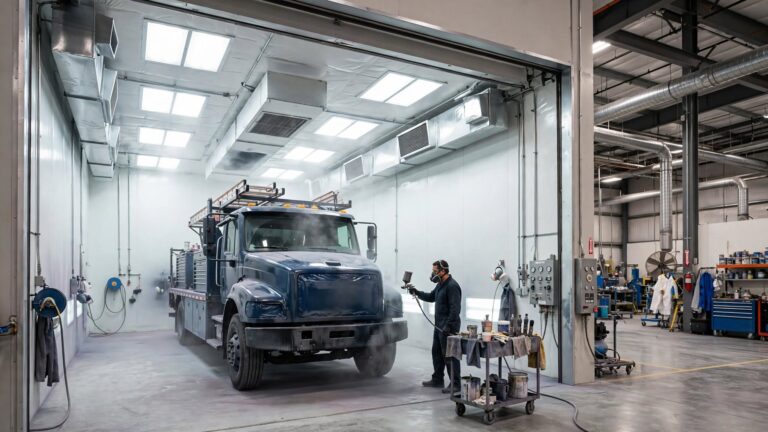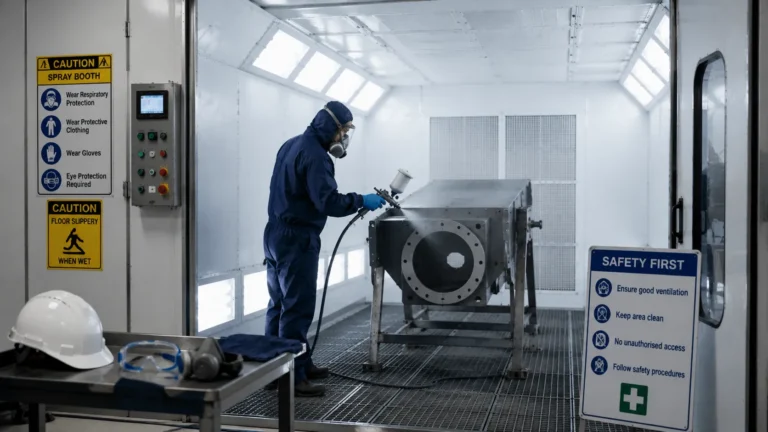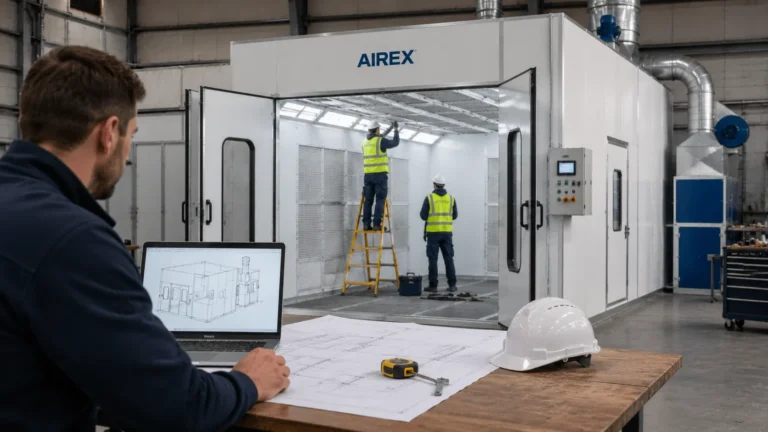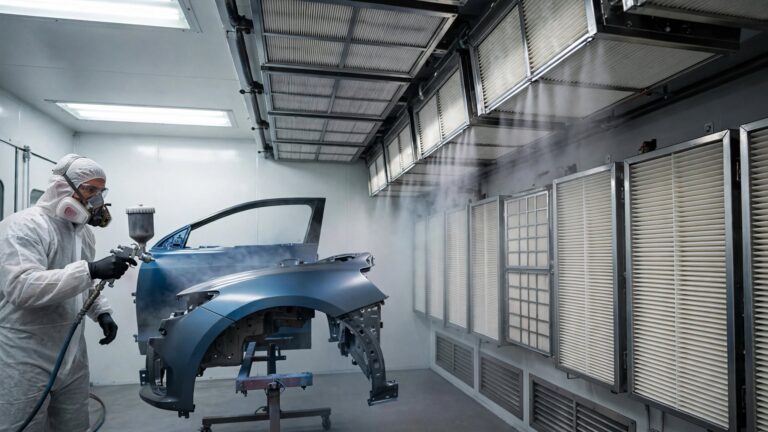

Industrial paint spraying creates serious workplace risks without proper controls. Strong ventilation, operator training, and equipment maintenance all support safer operations. Effective Spray Booth Safety measures also reduce fire hazards, overspray contamination, and worker exposure to harmful fumes. Many UK workshops now follow stricter compliance standards because paint particles and solvent vapours can damage health over time.
Modern spray booths include filtration systems, airflow controls, and fire suppression technology. However, technology alone cannot prevent accidents. Workers must understand safe spraying distances, correct protective equipment, and daily inspection routines. Poor housekeeping often causes slips, blocked airflow, and combustible dust build-up. These issues increase operational risks inside busy finishing facilities.
Manufacturers across automotive, aerospace, and industrial sectors rely on consistent safety standards. Downtime from accidents affects productivity and raises maintenance costs. Proper booth management supports better paint finishes and cleaner working conditions. A safe spraying environment also improves employee confidence and operational efficiency. Businesses that prioritise Spray Booth Safety often see lower repair costs and stronger long-term compliance outcomes.
Industrial spraying releases airborne particles, volatile organic compounds, and flammable vapours. Without strong ventilation, these contaminants quickly spread through the workplace. This exposure increases respiratory risks and creates dangerous ignition conditions. UK Health and Safety Executive guidance highlights ventilation and extraction as core requirements for controlled spraying operations.
Operators face several daily hazards during paint spraying tasks. Understanding these risks improves prevention planning and operational control. Common dangers include:
Fire and explosion risks from solvent vapours.
Respiratory exposure to airborne paint particles.
Slippery floors caused by overspray accumulation.
Electrical hazards from damaged lighting or wiring.
Skin irritation from direct chemical contact.
Many incidents occur because businesses overlook routine inspections. Dirty filters and blocked airflow systems reduce extraction efficiency. Faulty lighting also affects spraying accuracy and visibility. Safe industrial spraying depends on continuous monitoring and preventative maintenance.
Strong airflow remains essential for maintaining safe booth conditions. Ventilation systems remove harmful fumes while supporting cleaner paint application. Downdraft booths often provide better contaminant control because air moves downward away from operators. Crossdraft systems may suit smaller workshops but require careful airflow balancing.
Poor airflow increases overspray build-up and heat accumulation. This combination raises fire risks and affects paint quality. Operators should regularly test airflow rates and replace filters before performance declines. Consistent airflow supports safer breathing conditions and cleaner production standards.
Protective equipment creates the first defence against chemical exposure. Every operator should wear approved respiratory protection during spraying operations. Disposable masks rarely provide enough protection for industrial coatings. Air-fed respirators often deliver stronger protection against solvent fumes and fine particles.
The following equipment supports safer spraying conditions in most industrial facilities:
| PPE Item | Main Purpose | Recommended Use |
|---|---|---|
| Air-fed respirator | Protects lungs from fumes | Continuous spraying tasks |
| Chemical-resistant gloves | Prevents skin exposure | Paint mixing and spraying |
| Safety goggles | Shields eyes from overspray | Booth preparation and spraying |
| Spray suits | Reduces skin contamination | Full spraying operations |
| Anti-static footwear | Limits ignition risks | Solvent-based paint areas |
Workers should inspect PPE before every shift. Damaged respirators or torn gloves reduce protection immediately. Businesses should also train staff on correct fitting procedures. Proper PPE only works when operators use it consistently and correctly.
Respiratory exposure remains one of the largest health concerns during industrial spraying. Long-term solvent exposure may contribute to breathing difficulties and occupational illness. Air-fed masks help reduce exposure by supplying clean breathing air directly to operators.
Fit testing also plays a critical role in respiratory safety. Poorly fitted masks allow contaminated air to bypass filters. Businesses should schedule regular testing and replace worn equipment promptly. Consistent respiratory protection strengthens overall Spray Booth Safety performance across industrial facilities.
Clear operating procedures reduce accidents and improve spraying consistency. Operators should follow structured routines before, during, and after spraying sessions. Pre-operation checks often identify damaged equipment before hazards escalate. These checks support safer daily production.
Daily inspections help maintain booth performance and reduce operational downtime. Important checks include:
Inspecting ventilation fans and extraction systems.
Checking filters for overspray blockage.
Testing emergency stop systems.
Verifying fire extinguishers remain accessible.
Cleaning overspray from floors and walls.
These simple routines improve both safety and coating quality. Clean booths also support stronger airflow efficiency and better lighting visibility. Regular inspections reduce unexpected failures during high-volume production periods. Learn more about our Factory Paint Finishing service.
Flammable coatings require strict ignition control measures. Sparks, static discharge, and exposed wiring all increase fire risks. Operators should keep ignition sources away from spraying areas at all times. Anti-static flooring and grounded equipment help reduce discharge risks.
Proper paint storage also improves workplace safety. Solvents should remain inside approved fire-resistant cabinets when not in use. Waste materials require sealed metal containers to prevent vapour build-up. Effective fire prevention strategies strengthen long-term operational reliability.
Consistent training supports safer operator behaviour and stronger compliance standards. Experienced workers still require refresher sessions because procedures and regulations change regularly. Training should cover equipment handling, emergency response, ventilation systems, and PPE usage.
Preventative maintenance helps businesses avoid costly shutdowns and dangerous failures. Dirty filters reduce extraction performance and increase airborne contamination. Worn fan motors also affect airflow consistency inside the booth. Regular servicing keeps systems operating within safe limits.
Maintenance schedules should include electrical inspections, airflow testing, and lighting checks. Calibration of pressure gauges also supports stable spraying conditions. Businesses that prioritise maintenance often achieve better coating quality alongside improved Spray Booth Safety standards.
Strong workplace safety depends on communication and accountability. Supervisors should encourage operators to report hazards immediately. Quick reporting prevents small issues from developing into serious incidents. Open communication also improves staff confidence and operational awareness.
Safety signage, refresher training, and regular audits reinforce safe behaviour. Businesses that invest in safety culture often experience fewer disruptions and stronger workforce retention. Long-term safety performance depends on continuous improvement and shared responsibility.
Industrial paint spraying requires more than advanced equipment alone. Safe operations depend on ventilation, protective equipment, training, and disciplined daily procedures. Businesses that focus on Spray Booth Safety reduce workplace risks while improving coating quality and operational reliability.
Routine inspections remain essential for preventing airflow issues, fire hazards, and equipment failure. Proper respiratory protection also supports healthier working conditions for spray booth operators. Clear safety procedures help teams maintain consistent standards during demanding production schedules.
Strong maintenance programmes and ongoing staff training create safer long-term operations. These measures support compliance, reduce downtime, and protect valuable equipment. Industrial facilities that prioritise safety build cleaner, more efficient, and more reliable spraying environments.