
Choosing between Internal vs External Spray Booths affects productivity, safety, installation costs, and long-term operating efficiency. Many workshops focus only on upfront pricing. However, booth placement also changes airflow performance, maintenance access, energy use, and compliance requirements. A poorly planned setup often creates workflow delays and inconsistent paint finishes.
Modern finishing operations rely on controlled environments to reduce contamination and improve coating quality. According to Health and Safety Executive guidance, proper extraction and ventilation remain essential for worker protection and finish consistency. Internal and external booth systems both support these goals, but each suits different facilities and workloads.
Internal booths sit within the building envelope. They often simplify climate control and operator comfort. External booths are installed outside the workshop and free valuable floor space. The right solution depends on production scale, available space, local regulations, and future expansion plans.
In this guide, we compare Internal vs External Spray Booths using practical workshop data, operational factors, and installation considerations. We also explain how each option affects workflow, maintenance, and long-term running costs.
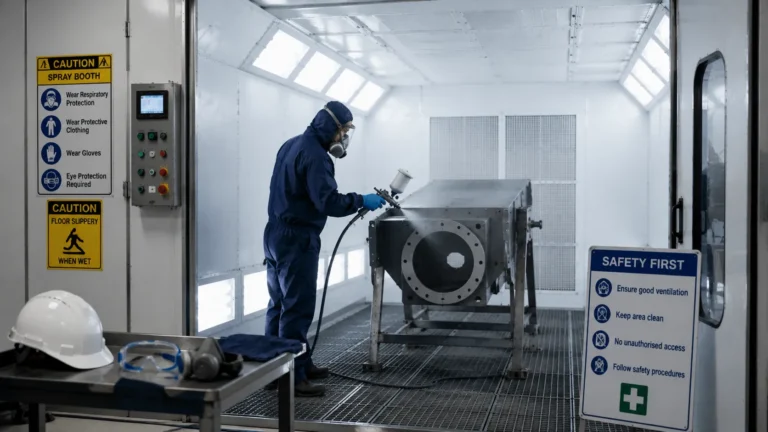
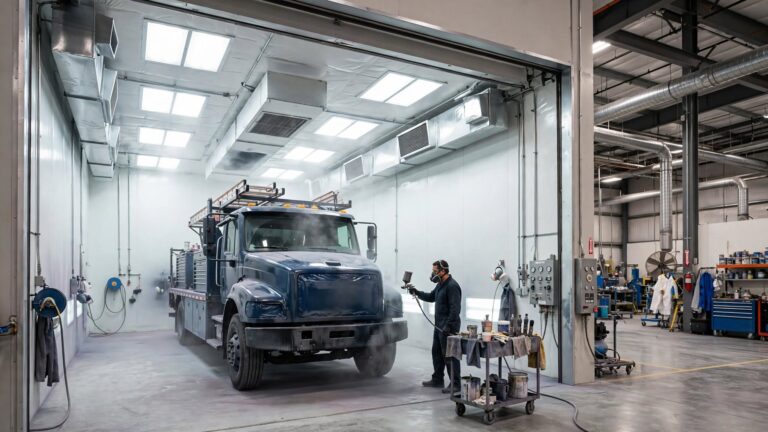
Internal spray booths operate fully inside the workshop structure. They connect to extraction systems, filtered airflow units, and controlled lighting within the building. These systems suit facilities with available indoor space and stable environmental conditions.
Most internal booths use downdraft or semi-downdraft airflow systems. Air enters through filtered ceiling plenums and exits through floor or rear extraction ducts. This process limits overspray contamination and improves paint transfer efficiency. Many automotive repair centres prefer internal booths because technicians work in a climate-controlled environment throughout the year.
Internal systems also simplify maintenance access. Engineers can inspect fans, filters, and ducting without external weather exposure. This often reduces servicing delays during winter conditions. However, indoor installations require careful fire safety planning and stronger building ventilation support.
Internal booths offer several operational advantages for medium-sized workshops. These include:
Better temperature stability during cold weather.
Easier worker access during maintenance tasks.
Reduced weather exposure for electrical systems.
Simpler integration with existing production areas.
Improved operator comfort during long spraying sessions.
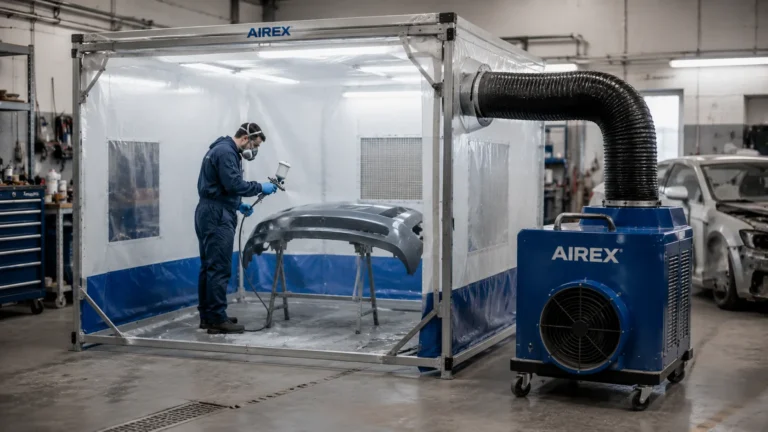
These systems also support higher coating consistency. Stable indoor temperatures reduce curing variations and moisture contamination. This matters for precision automotive and industrial finishing applications. Get started with our in-depth resource on Mobile Spray Booth.
However, indoor installations reduce available floor space. Larger booths may also require structural modifications, upgraded ventilation systems, and additional fire-rated partitions. These factors increase installation complexity in older facilities.
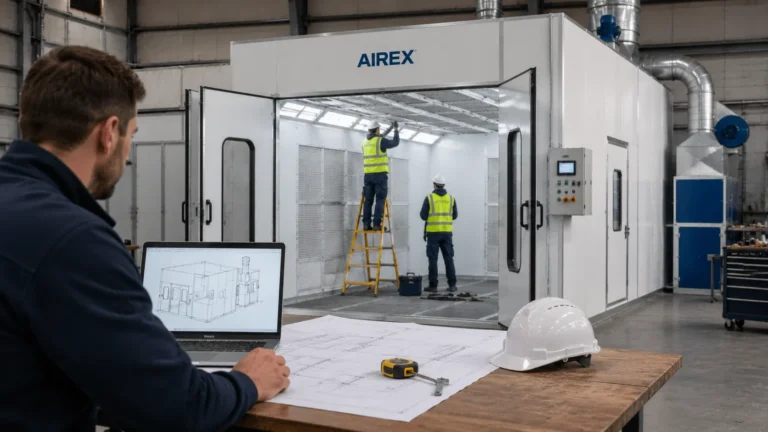
External spray booths install outside the main workshop building. They connect through access doors or conveyor systems while keeping the main production floor clear. Many expanding businesses choose external layouts because property costs continue rising across industrial areas.
External booths maximise internal working space. Workshops can use freed areas for preparation bays, storage, or assembly operations. This improves overall workflow efficiency without requiring relocation to a larger facility.
Modern external systems also include insulated panels and advanced airflow controls. These upgrades improve thermal efficiency and reduce weather-related temperature fluctuations. High-performance units now operate effectively in colder climates with minimal energy loss.
External booths provide several practical benefits for growing operations:
| Feature | Internal Booths | External Booths |
|---|---|---|
| Workshop floor space | Reduced | Maximised |
| Weather protection | Excellent | Moderate |
| Expansion flexibility | Limited | Strong |
| Installation disruption | Moderate | Lower |
| Maintenance accessibility | Easier indoors | Easier externally |
| Noise inside workshop | Higher | Lower |
External systems also reduce indoor noise levels. Extraction fans and curing equipment remain outside the main working area. This creates a quieter production environment for technicians and assembly teams.
Despite these benefits, external booths require stronger weatherproofing and insulated ducting. Exposure to rain, dust, and temperature shifts increases long-term maintenance demands. Proper installation quality becomes critical for reliable performance.
When evaluating Internal vs External Spray Booths, total ownership cost matters more than initial purchase price. Internal systems often cost less initially because they use existing building structures. However, indoor ventilation upgrades and structural modifications can quickly increase expenses.
External booths usually require groundwork, weatherproof utility connections, and external ducting systems. These additions increase installation budgets. Yet many businesses recover those costs through improved workshop efficiency and space optimisation.
Energy efficiency also differs between both systems. Internal booths retain heat more effectively during colder months. External systems lose more thermal energy unless they use premium insulation panels and heat recovery systems.
According to industry estimates, heat recovery units can lower spray booth energy use by up to 30%. This makes advanced external systems more competitive over time.
Daily workflow strongly affects booth performance and labour efficiency. Internal booths allow technicians to move between prep and spraying areas quickly during poor weather. This improves productivity during busy repair schedules.
External booths, however, create cleaner workshop layouts. Separating spraying from production areas reduces contamination risks and overspray migration. Manufacturing facilities often favour this arrangement for quality control purposes.
Before choosing a system, businesses should assess:
Available workshop footprint.
Future production growth plans.
Local planning regulations.
Energy efficiency targets.
Existing extraction infrastructure.
Staff workflow requirements.
These factors determine whether internal or external layouts deliver stronger long-term value.
The decision between Internal vs External Spray Booths depends on operational priorities, available space, and long-term expansion goals. Internal systems suit workshops needing stable climate control and easier technician access. They perform especially well in colder environments and facilities with unused indoor floor space.
External booths work best for businesses wanting maximum internal capacity and cleaner production layouts. They support scalable growth and reduce disruption inside busy workshops. Modern insulated designs also improve year-round operating efficiency significantly.
Neither option fits every facility perfectly. The best results come from matching booth design to workflow demands, compliance requirements, and energy goals. Businesses planning future expansion should assess space usage carefully before installation begins. A well-positioned spray booth improves finish quality, operator safety, and overall production efficiency for many years.