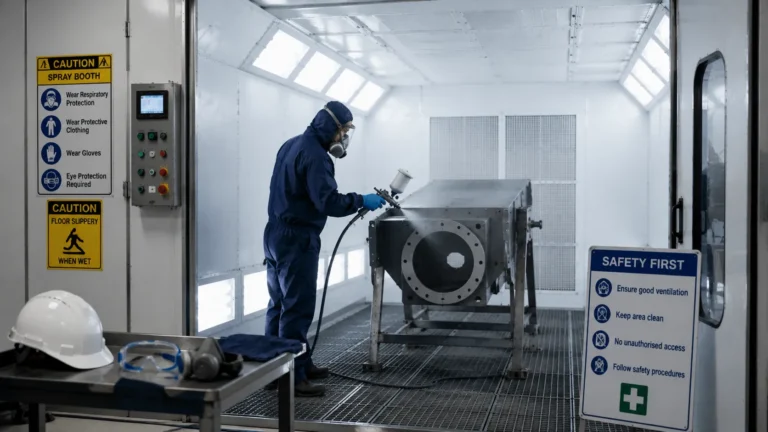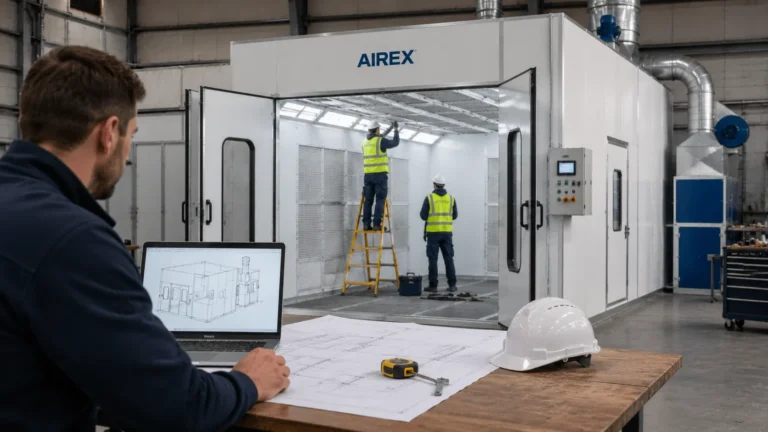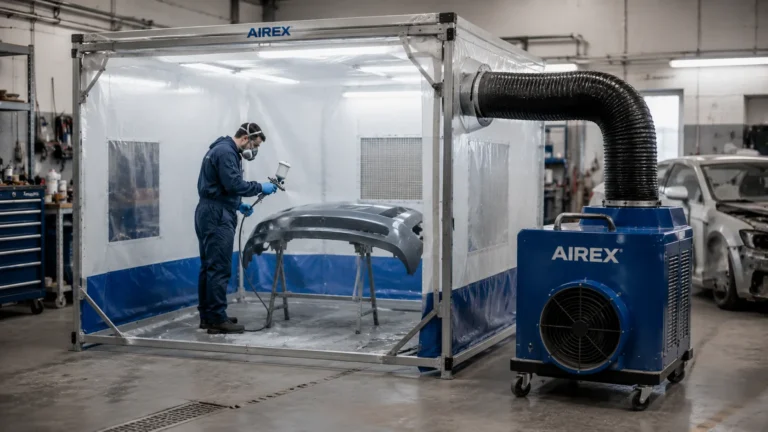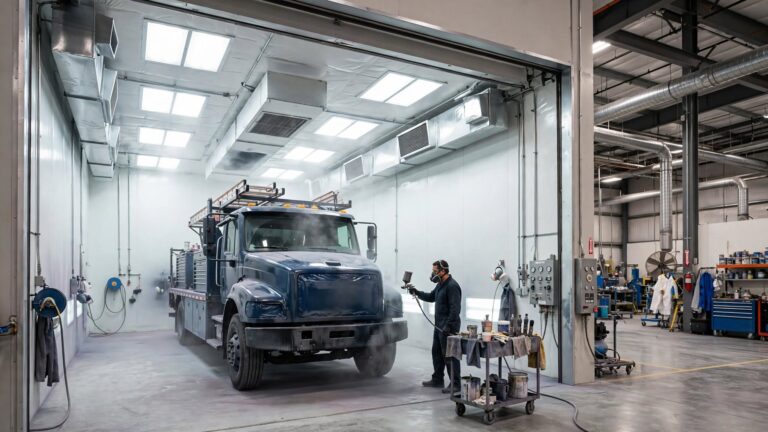

A successful Spray Booth Installation improves paint quality, workplace safety, and operational efficiency. Many businesses focus only on booth size or price. However, installation planning affects long-term performance far more than the initial purchase. Poor airflow, incorrect positioning, and weak extraction systems can increase defects by up to 30%. These issues also raise maintenance costs and energy use over time.
Modern spray booths support industries including automotive repair, aerospace, manufacturing, and woodworking. Each environment needs different airflow rates, filtration systems, and compliance standards. In the UK, spray booth systems must follow strict health and environmental regulations. This includes COSHH guidance, fire safety standards, and proper ventilation requirements.
Good planning reduces downtime during installation and avoids expensive redesigns later. Businesses should assess floor space, workflow, power supply, and future production needs before choosing equipment. A properly planned booth also improves worker comfort and reduces overspray contamination. These factors directly affect productivity and finishing quality.
Understanding the key elements of a Spray Booth Installation helps businesses make informed decisions and avoid costly operational problems.
A well-planned booth layout improves productivity and creates safer working conditions. Before installation begins, businesses must measure available floor space carefully. This includes ceiling height, vehicle access, operator movement, and maintenance clearance. Restricted layouts can reduce airflow efficiency and create overspray build-up.
Most full-size industrial spray booths require additional clearance around extraction systems and ducting. Technicians also need enough space for filters, servicing panels, and lighting maintenance. Ignoring these requirements often creates operational delays later.
Businesses should consider these space factors:
Vehicle or product dimensions.
Operator access zones.
Extraction duct routes.
Lighting placement.
Maintenance clearance.
Future expansion plans.
A smart workflow reduces unnecessary movement and improves finishing consistency. Ideally, materials should move through preparation, painting, drying, and inspection without crossing paths. Poor layouts increase contamination risks and slow production times.
Many facilities install booths near preparation bays to reduce transport distance. This lowers dust exposure before painting begins. Efficient positioning also improves turnaround times for high-volume operations.
| Planning Factor | Why It Matters |
|---|---|
| Booth location | Improves workflow efficiency |
| Ceiling height | Supports airflow balance |
| Access doors | Allows smooth product movement |
| Extraction routes | Reduces ventilation restrictions |
| Service access | Simplifies maintenance tasks |
Airflow is the foundation of every effective Spray Booth Installation. Poor ventilation causes uneven paint finishes, overspray accumulation, and unsafe working conditions. Proper airflow removes airborne particles while maintaining stable temperature conditions.
Most modern booths use either crossdraft, semi-downdraft, or full downdraft airflow systems. Downdraft systems usually provide the cleanest finishes because air moves vertically away from painted surfaces. Crossdraft systems cost less but may create more contamination risks.
Industry guidance often recommends airflow speeds between 0.3 and 0.5 metres per second. This level supports efficient overspray removal without disturbing wet coatings. Don’t miss our cornerstone content on contact.
High-quality filtration protects both workers and painted surfaces. Multi-stage filtration systems trap overspray particles before contaminated air leaves the booth. Efficient filters also improve compliance with environmental regulations.
Key ventilation considerations include:
Air exchange rates.
Filter efficiency levels.
Extraction fan capacity.
Noise control measures.
Heat recovery systems.
Energy-efficient extraction systems now reduce operating costs significantly. Some advanced booths recover heated air to lower winter energy consumption. This approach supports both sustainability and long-term savings.
A professional Spray Booth Installation requires stable electrical infrastructure. Spray booths rely on fans, lighting, heating units, and control systems simultaneously. Weak electrical capacity can lead to equipment failure and inconsistent booth performance.
LED booth lighting has become increasingly popular because it improves colour accuracy while reducing power consumption. Consistent lighting also helps technicians identify paint defects earlier during application.
Installers should confirm:
Power supply capacity.
Emergency shutdown systems.
Explosion-proof electrical fittings.
Backup safety controls.
Lighting uniformity levels.
Temperature consistency directly affects paint curing quality. Many coatings perform best between 20°C and 25°C. Poor heating systems can slow drying times and increase surface defects.
Gas-fired and diesel-fired heating systems remain common in industrial environments. Infrared curing systems also improve efficiency for certain applications. The right heating solution depends on booth size, production volume, and operational budget.
UK spray booth systems must comply with workplace safety and environmental regulations. Businesses should ensure installations meet COSHH and HSE guidance before operation begins. Fire suppression systems may also be required depending on the materials used.
Compliance areas include:
Ventilation standards.
Fire resistance requirements.
Hazardous material handling.
Emissions control.
Worker exposure limits.
Working with experienced installers reduces compliance risks and supports smoother inspections.
Routine servicing keeps booth performance stable and extends equipment lifespan. Filters, fans, lighting systems, and burners all require scheduled maintenance. Poor access design increases downtime and repair costs.
Businesses should position booths where technicians can safely access extraction units and service panels. Preventive maintenance also reduces airflow imbalance and energy waste over time.
Recommended maintenance planning includes:
Easy filter replacement access.
Clear service pathways.
Scheduled airflow testing.
Lighting inspections.
Fan performance monitoring.
Many businesses underestimate future growth during initial planning stages. Production increases often require larger booths or upgraded airflow systems later. Expanding an unsuitable layout can become extremely expensive.
Flexible designs support future equipment upgrades without major structural changes. Modular booth systems also allow phased expansion when production demand increases.
A future-focused installation plan delivers several advantages:
Lower upgrade costs.
Improved operational flexibility.
Reduced disruption during expansion.
Better long-term return on investment.
Careful planning today prevents expensive redesigns tomorrow.
A successful Spray Booth Installation depends on far more than choosing a booth model. Businesses must evaluate space, workflow, airflow, heating, compliance, and maintenance requirements together. Every decision affects operational efficiency, paint quality, and long-term running costs.
Proper ventilation and filtration remain critical for safe and consistent finishing performance. Reliable electrical systems and temperature control also improve coating durability and reduce defects. At the same time, future expansion planning protects businesses from costly modifications later.
Working with experienced installation specialists helps companies avoid common design mistakes and compliance issues. A carefully planned booth creates a safer environment while supporting faster production and better finishing results.
When businesses invest time in detailed installation planning, they achieve stronger operational performance and longer equipment lifespan.